Hot Dog Sandwich or Hot Dog Icon? A Tasty Debate


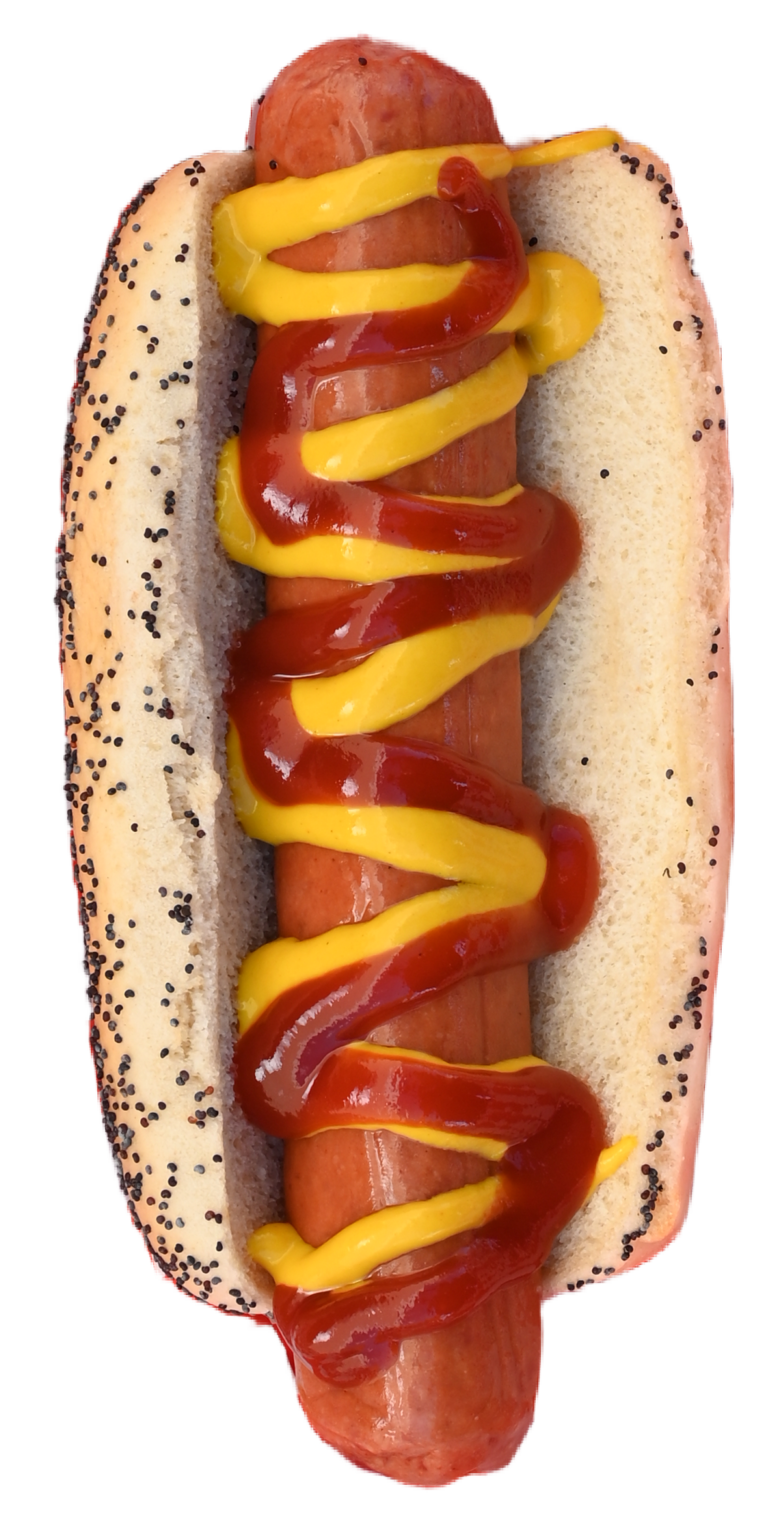
Few food arguments have the staying power of the hot dog question. Ask a roomful of people whether a hot dog is a sandwich, and you will usually get more than an answer. You get a philosophy. Some people reach for structure and taxonomy. Bread plus filling equals sandwich, case closed. Others react almost emotionally. A hot dog is a hot dog. It belongs to its own category, protected by habit, memory, and common sense.
The argument sounds playful because it is playful, but it also reveals something more interesting. We do not classify food by ingredients alone. We classify it by culture, by eating context, by language, and by the expectations that come with it. A turkey club, a meatball sub, and a lobster roll all involve bread surrounding a filling, yet nobody confuses one for another at the lunch counter. The hot dog sits right in the middle of that tension. It shares enough features with sandwiches to invite the label, yet carries enough identity to resist it.
That is why the debate never quite dies. It is not really about whether a sausage in a bun can meet a technical definition. It is about whether technical definitions matter more than culinary identity.
The case for calling it a sandwich
On paper, the sandwich camp has a strong argument. If a sandwich is food placed in or between bread, then a hot dog fits comfortably. The bun is bread. The sausage is the filling. Mustard, relish, onions, sauerkraut, chili, or slaw act as condiments and toppings, no different in principle from the extras on other sandwiches.
The shape does not rescue the hot dog from this logic. Many sandwiches are served on hinged rolls rather than on two fully separate slices of bread. A submarine sandwich often comes in a split roll attached along one side. So does a lobster roll, which few people hesitate to place in the sandwich family. Even a pulled pork sandwich may arrive on a bun that folds around the filling rather than stacking neatly above and below it. If the hinge disqualifies a hot dog, it ought to disqualify a wide range of accepted sandwiches too.
This is where taxonomy-minded eaters feel on solid ground. They are not being difficult. They are noticing a real pattern. The hot dog looks like a subtype within a broad sandwich category, much the way squares are a subtype within the category of rectangles. Not every rectangle is a square, but every square fits the rule. By that reasoning, not every sandwich is a hot dog, but every hot dog is a sandwich.
From a food service perspective, that classification can even seem practical. If you are sorting menu items into broad operational groups, sandwiches and hot dogs often share equipment, service style, and meal occasion. They are handheld. They are commonly lunch foods. They rely on bread to contain a savory center. In stadiums, diners, and fast-casual settings, they often occupy neighboring spaces both on the menu board and in the kitchen workflow.
That line of thinking has a certain efficiency. It values consistency over sentiment, and food classification can benefit from consistency. If you have ever tried to organize a menu, write nutrition categories, or train staff on product groupings, you know that tidy definitions save time.
Still, tidy definitions are not the same thing as lived categories.
Why so many people resist the label
The resistance to calling a hot dog a sandwich is not usually rooted in ignorance. It is rooted in the fact that food names carry more than structural information. They carry social meaning.
Say the word “sandwich” and most people imagine a broad but recognizable class of foods. Ham on rye. Tuna salad on wheat. A grilled chicken breast on a bun. Maybe a hero, a wrap, or a panini, depending on how expansive they are feeling. Say “hot dog,” and a different mental picture appears immediately. You can smell the grilled frank, hear the snap of the casing, and picture the soft bun yielding under mustard. You might think of a ballpark, a backyard cookout, a street cart, or a summer afternoon.
That sensory and cultural package matters. In practical language, a hot dog functions as a distinct item. Nobody walks up to a concession stand and asks, “What kind of sandwiches do you have?” then happily receives a hot dog as an expected answer. If the stand sells hot dogs and sandwiches, those are typically separate menu categories because customers experience them as separate categories.
That distinction becomes sharper when toppings enter the conversation. A hot dog’s toppings are not simply arbitrary fillings. In many regional traditions, they are part of the identity of the dish. A Chicago dog with mustard, relish, onion, tomato, pickle spear, sport peppers, and celery salt is not merely a sandwich with a lot going on. It is a culturally specific hot dog. A Coney dog dressed with meat sauce, onions, and mustard also announces its category instantly. The same goes for a chili dog in Texas, a slaw dog in the Carolinas, or a steamed dog in parts of the Northeast.
When a food accumulates that much specialized language around itself, it usually stops behaving like a generic example of a larger class. It becomes its own thing.
The bun changes the experience
The strongest anti-sandwich argument is not legalistic or sentimental. It is experiential. A hot dog bun creates a different eating experience than most sandwiches do.
That may sound minor, but it is not. Anyone who has worked in food or spent time thinking seriously about texture knows that structure shapes taste. The ratio of bread to filling, the way pressure distributes in the hand, the order in which the tongue encounters salt, fat, and acidity, all of that affects how a food is perceived.
A hot dog bun is engineered for a cylindrical filling. It cradles the sausage. It supports toppings that would slide off flatter bread. It compresses differently with each bite. You tend to bite through a hot dog https://gravatar.com/underconstructionhotdogs laterally, moving across sausage, bun, and condiments in a tight, repeating pattern. Many sandwiches, especially stacked ones, deliver a more layered bite. The mechanics are different enough that the foods feel distinct, even if they share some ingredients.
This is one reason the “bread plus filling” rule can only take you so far. By that rule, tacos, gyros, and stuffed pitas start drifting into sandwich territory, and that is where people realize taxonomy has outrun usefulness. At a certain point, classification becomes more annoying than illuminating.
The hot dog thrives in that zone. Yes, it resembles a sandwich in broad form. No, it does not behave quite like one.
History complicates the argument
Food history rarely delivers the neat answer people want. The hot dog, as Americans know it, emerges from a tangle of sausage traditions, immigrant foodways, bakery practices, and street vending. German and Central European sausages laid much of the groundwork. The bun, served in tandem with the sausage, turned it into a portable meal suited to public eating. By the late nineteenth and early twentieth centuries, hot dogs had become deeply woven into American food culture.
That history matters because the hot dog did not evolve as a variation on ham sandwiches or cold cuts. It developed along its own line, with its own rituals and serving styles. Street vendors needed food that could be eaten quickly and cheaply. Ballparks needed food that was filling, familiar, and easy to move in volume. The hot dog answered those needs elegantly.
Once a dish becomes established through those settings, language hardens around it. The public does not wait for philosophers of food to settle the category. They start using the name that fits the experience. Over time, that usage matters more than theoretical definitions.
This is true all over the culinary world. Many foods occupy blurry borders if you inspect them closely. Is a burrito a wrap or something more specific than a wrap? Is a popover a roll, a pastry, or a category unto itself? Is a tomato sauce with meat over pasta the same kind of dish as a ragù served in Bologna? These questions are not trivial, but they are usually settled in practice by communities of eaters, cooks, and sellers, not by abstract logic alone.
By that standard, the hot dog has long since earned independence.
What menus and restaurants quietly tell us
One of the most revealing places to study this issue is not a debate thread but a menu. Restaurants are ruthless about categories because categories affect customer expectations, ordering speed, and perceived value. If a menu is confusing, guests hesitate, servers spend more time explaining, and the whole operation slows down.
Look at how hot dogs are usually presented. In diners, sports venues, fast-food chains, and specialty shops, they are often listed under “hot dogs” rather than “sandwiches.” That is not accidental. Operators know customers understand the item instantly when it stands alone. Put it under sandwiches and you introduce a split second of friction. People can work it out, but they should not have to.
I have seen versions of this in real kitchens and menu planning sessions. The category that wins is usually the one that causes the fewest follow-up questions. A burger might live under sandwiches in one restaurant and under burgers in another, depending on concept and clientele. A hot dog almost always gets its own lane when the menu has room for it. That is a strong practical signal. The market has a vote in language, and the market tends to treat the hot dog as its own item.
There is also the matter of how customers compare value. When someone orders a sandwich, they often expect a certain heft, side pairing, or ingredient complexity. A hot dog can certainly be elaborate, but its baseline value proposition is different. It is often quicker, simpler, and more casual. Even when gourmet versions push into premium territory, they still lean on the familiar identity of the hot dog rather than trying to pass as artisanal sandwiches.
Regional styles prove how specific the category is
The hot dog is one of those foods whose regional variations strengthen, rather than weaken, its identity. If it were merely a generic sandwich, regional specificity would likely dissolve it into broader sandwich culture. Instead, the opposite happens. The more styles you encounter, the more “hot dog” feels like a self-contained culinary universe.
Consider how clearly these names communicate to people who know them: Chicago dog, New York dog, Sonoran dog, Coney dog. Each one suggests a bun style, a sausage type, a topping set, and often a method of cooking or serving. The Sonoran dog, for instance, commonly introduces bacon wrapping and toppings such as beans, onion, tomato, mustard, mayonnaise, and jalapeño sauce. It is lavish, almost maximalist, but nobody mistakes it for a random sandwich invention. It is still a hot dog at heart.
That kind of specificity usually marks a mature category. Pizza works this way. So does barbecue. So does chili. Once a food develops a map of regional expressions, it has moved beyond mere structural definition into cultural territory. People defend styles, argue over authenticity, and form memories around very precise details.
The hot dog has all of that. It also has etiquette. In some places, ketchup on a hot dog is unremarkable. In others, especially around certain classic styles, it is treated almost as a breach of decorum. Sandwiches rarely inspire that kind of topping orthodoxy across regions.
The linguistic trap at the center of the debate
Much of the disagreement comes from using the word “is” in two different ways.
If someone asks, “Is a hot dog a sandwich?” they may be asking a taxonomic question, meaning does it fit the broad structural category. Or they may be asking an identity question, meaning does it function in the world the way sandwiches function. Those are different questions, and they produce different answers.
Structurally, the sandwich argument is hard to dismiss. Culturally and linguistically, the hot dog argument is stronger than many taxonomists want to admit.
This kind of ambiguity shows up in plenty of everyday language. A stool is technically a seat, but when someone says, “Pull up a seat,” you picture more than a backless stool. A coupe is technically a car, but it carries a narrower identity. Category and identity can overlap without collapsing into each other.
The hot dog lives in that overlap. It can belong to the sandwich family in an abstract sense while still operating as a distinct culinary species in normal speech. Once you separate those levels, the argument becomes less heated and more interesting.
Why people care more than they expect
No one’s lunch depends on winning the classification fight, yet people return to it with surprising energy. Part of the reason is that food categories feel intimate. They connect to childhood habits, family traditions, and local pride. Tell someone their cherished regional hot dog is “just a sandwich,” and they may hear a flattening of something more meaningful.
There is also a certain pleasure in low-stakes arguments with no practical cost. Sports fans debate the greatest teams. Movie lovers debate whether a sequel counts as a classic. Eaters debate whether a hot dog is a sandwich. These arguments give people a chance to show wit, draw fine distinctions, and reveal what they value without serious consequences.
The hot dog is especially suited to this role because it sits at the crossroads of popular culture and culinary specificity. It is ordinary enough to be universal and distinctive enough to provoke strong opinions. That is a rare combination.
A simple food can also expose how categories work in daily life. Most of us believe we sort the world logically, but we often sort it by familiarity and use. The hot dog debate makes that visible. People who insist on strict definitions discover that language is messier than rules. People who rely on intuition discover that intuition often has a structure, even if they have never stated it out loud.
My read on the matter
After years of watching how food is served, sold, discussed, and remembered, I think the best answer is also the least flashy. A hot dog can be classified as a kind of sandwich in the broadest structural sense, but in culinary practice it stands as its own category.
That may sound like a compromise, but it is really a judgment about which level of classification matters most. If you are building a giant food taxonomy, include the hot dog under a wide sandwich umbrella if you must. If you are writing a menu, teaching food culture, or talking like a normal person at lunch, treat the hot dog as distinct.
This distinction respects both logic and usage. It avoids the performative certainty that often drains the fun from food debates. Most importantly, it lines up with how people actually encounter the dish. No one bites into a hot dog and thinks, “Ah yes, a standard sandwich experience.” They think, “This is a hot dog,” with all the specific textures, smells, and associations that phrase carries.
That is the deeper point. Categories should help us describe the world more accurately, not flatten it. The hot dog is too culturally rich, too structurally specialized, and too historically established to be reduced to a generic sandwich label in ordinary life.
The delicious strength of a category all its own
The reason the hot dog endures is not that it slips neatly into a definition. It is that it has become an icon. It survives baseball seasons, gas station rollers, backyard grills, late-night carts, and regional feuds over toppings because it remains instantly recognizable in every form. Cheap or carefully crafted, plain or overloaded, it carries a complete identity with very little explanation.
That is more than most sandwiches can claim. A sandwich often needs modifiers to become vivid. The hot dog arrives vivid from the start.
So if someone insists the hot dog is a sandwich, they are not exactly wrong. They are just using a wider lens than most people use when they eat. If someone insists a hot dog is categorically not a sandwich, they are defending the lived reality of the thing, which has its own legitimacy.
The more satisfying answer, and the one that best fits real food culture, is that the hot dog occupies both positions unevenly. It resembles a sandwich enough to stir the argument, yet it stands apart enough to keep winning it. That tension is part of its charm.
And perhaps that is exactly where the hot dog belongs, not trapped in a sterile label, but held in the warm, messy space where food becomes tradition, language, and identity all at once.
Under Construction Hot Dogs
1225 W U.S. Hwy 50, Pueblo, CO 81008
FAQ About hot dog
What are different types of hotdogs?
Under Construction Hot Dogs offers a classic all-beef hot dog, a quarter-pound Jumbo Dog, a Chili Dog, and a Chicago Dog, along with brats and a Spicy Link.
What does a chili dog have on it?
Our Chili Dog pairs a Vienna all-beef hot dog with chili, shredded cheddar cheese, and finely diced onions.
What is in a traditional Chicago dog?
Our Chicago Dog comes on a steamed poppy seed bun with yellow mustard, bright green relish, onions, tomato wedges, a pickle spear, sport peppers, and celery salt.